Showing posts with label intuitive eating. Show all posts

p-h-i-l-o-s-o-p-h-y

Wednesday, June 27, 2018


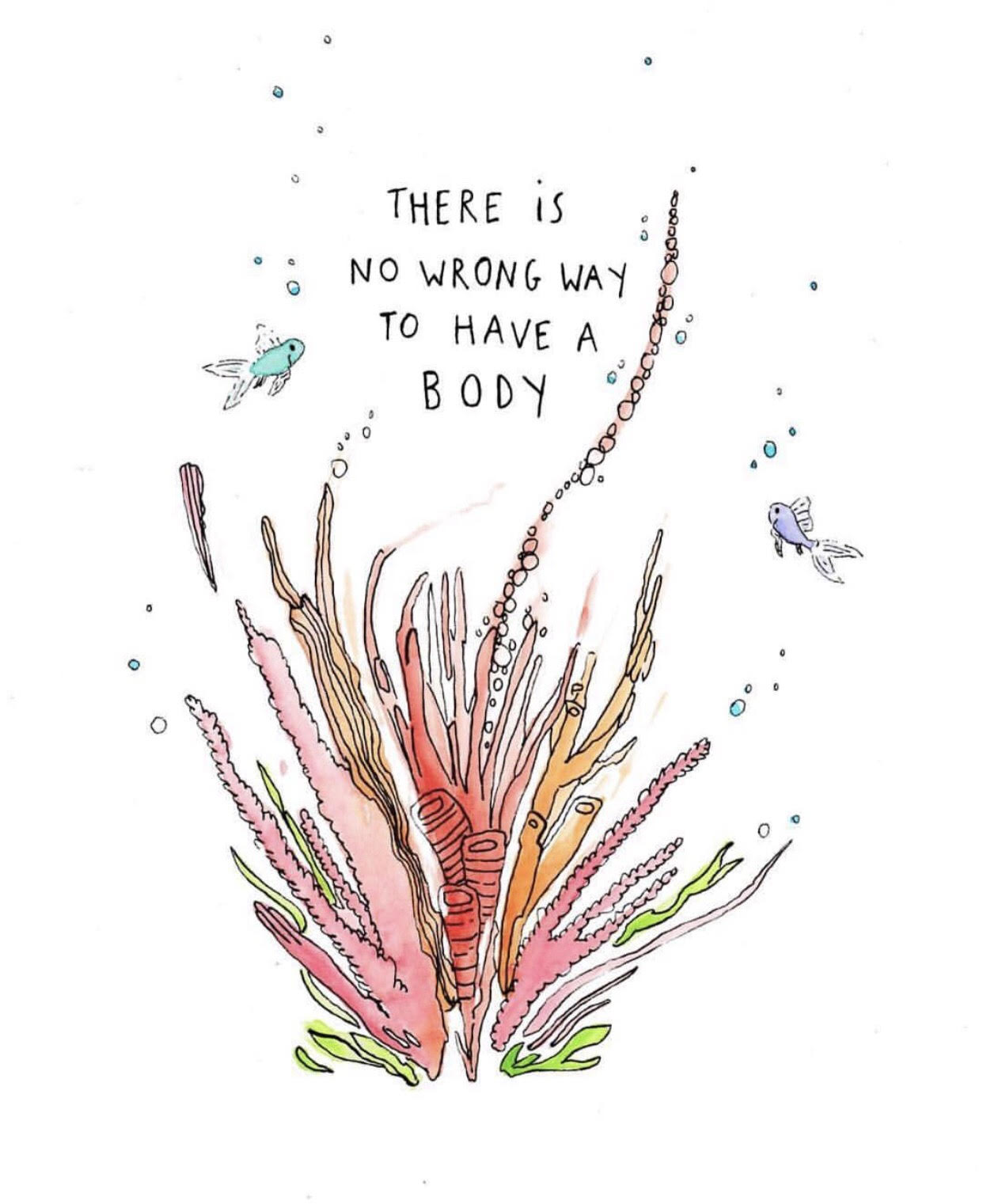
Over the past few months, I've been so very torn about what direction I wanted to take Healthful Pursuits in.  I love the Health at Every Size movement- but it's not perfect, it has a lot of holes and the community that supports HAES and body love- is truly anything but loving. It had me questioning if I wanted to be associated with a community that promoted love but acted completely opposite.  So I've had to ask myself some truth revealing questions. Bare with me here! 

Although I love the non-diet beliefs, do I truly believe that all weight loss is a bad thing?

No. I just don't. A year ago someone close to me was very heavy, he lost his breath and would sweat when trying to tie his shoes or walk up the stairs to his home. He had sleep apnea and slept with a noisy mask and machine running. He was very uncomfortable- not because of societal pressure or because skinny models were telling him he had to be, but because his body ached. Do I believe his weight caused these things? No, it was the fact that he was a very inactive person. He worked late hours at a stressful job, often times not getting home until dinner time. Stress also contributed, and lack of sleep.

So he decided to start a diet, a very popular one -because he wanted to change the way he was eating and he didn't know where to begin. He didn't know what changes to make, what foods were benefiting him nutritionally and which were benefiting him mentally. Grocery stores just confused him (thanks to all of the marketing and false advertising of "health" food).

Now- most of society would say this is a positive change. But the latter community would say it was the worst thing he could have done. Their opinion is that he should have begun to exercise, not worry about his weight and that his problems would improve whether he lost weight or not.


I agree this would be the first best option I would recommend as well. Except he didn't have time to exercise (remember stressful, long hours + a family he still needs to see) and the little bit of exercise that he would be able to squeeze in would not have been enough to make a difference in what he was experiencing. So he did something he could do in the season of life he was in- change his eating habits and yes- he restricted himself on this diet. He did lose weight, his apnea is gone (no more machine) and he has no issues with stairs or shoe tying. He continued for about a year (lost around 40 lbs- a modest amount, not an extreme diet) and then began to incorporate exercise into his life- he was physically more comfortable and felt more confident being able to complete a workout routine.
Today? He exercises regularly, maintains a weight that classifies his as overweight still but not obese, he is confident in his food decisions. He feels better. He still enjoys his life, social situations and he still enjoys food. If he wants ice cream, he will eat ice cream.  He's happy "hanging out" where he is.

I cannot say that he was wrong. I cannot say that what he did was bad for him. He is active, he can sleep without a machine and tie his shoes. He's confident.  Every person is different, these are all unique situations that need to be taken client by client. What worked for him is not what I would recommend for everyone and this wouldn't be the best for everyone.

But more importantly...

There is biblical guidance for caring for our bodies that this philosophy does not address or support. 

"While nothing in the Bible specifically addresses obesity and weight loss, there is much in God’s Word about the importance of our health and of taking care of our bodies. God warns us against gluttony. In the Old Testament God gave specific instructions about what His people, the Israelites, were to eat (Deuteronomy 14:1–21). Most of these commands were designed to keep the Israelites from eating harmful foods that would negatively impact their health. Some of the commands were also given so God’s people wouldn’t imitate the habits of the idolatrous people around them.

Gluttony, which is overeating or drinking to excess, is condemned in the Bible (Proverbs 23:20–21). Gluttony can lead to health risks and become a drain on one’s finances. Plus, the love of food and drink can all too easily become an idol in our lives. Anything that takes the place of God or becomes our number-one focus is, by definition, an idol and thus a sin against God (Exodus 20:3–6). Proverbs 23:2exhorts us to “put a knife to your throat if you are given to gluttony”; in other words, we are admonished to restrain our appetites.


Health at Every Size says to eat what you want when you want, how much you want. never restrict. This does not line up with the Bible. Just because I want or feel like eating an entire gallon of coffee ice cream by myself tonight, does not mean I should. We should be exercising self-control and wisdom in all areas of our life- including what we eat.


"While obesity and weight loss are valid concerns, we must be careful not to become obsessed with body image. Again, when something besides God becomes the major focus of life, it is sin. To constantly obsess about exercise, diet, and weight loss means we’ve allowed our bodies to become the center of our lives. Someone with a toned, fit body can be just as idolatrous as a glutton. Also, an obsession with weight loss can tip over into anorexia or bulimia, which also has a negative impact on health."


So what now? 
Everyone has their own definition and beliefs about nutrition.

I'm not choosing a side. 

I'm taking my clients individually. 

The HAES philosophy may be exactly what someone needs who struggles with anorexia/bulimia or fear of food. 

Helping people learn to eat in a way that nourishes their body and enables them to eat intuitively may be exactly what someone else needs. 

Someone may want to lose weight. What then? I respect that. I have lost weight, and while it's been a while since I've lost any more weight...do I want to be back to where I was before? No. I truly don't and I don't expect everyone else to accept being obese or very overweight and just learn to be happy there. I would present the facts, the science, and together we'd work to make changes in their lives that would result in weight loss. 

My goal and dream has always been to be helpful to my clients. To be encouraging and supportive of their goals. To help them live a healthy lifestyle (no matter their weight) and to help them navigate between all of the very confusing false advertising and new nutrition products thrown at us. and it's time I get back to doing that.

No matter which path we need to take together- I'm here to help you sort through fact vs. fear, and walk with you to meeting your goals. 


Turkey Meatloaf Muffins

Monday, February 26, 2018
I think meatloaf muffins just is not a cool name but I am not sure what I'd call them, so we are keeping it ;-)


A turkey meatloaf was on the menu for tonight and after seeing all of my friends posting their meal prepping egg muffins this weekend, I was inspired. I was also able to secretly add an entire zucchini and onion- only one kid noticed AND they ate it anyway: winner.  I also typically do not use an egg in my meatloaf mixture, so having the smaller sizes helped keep it all together.

Ingredients:

2lbs. lean ground turkey
1 chopped onion
1 chopped zucchini (optional)
1/2 cup plain breadcrumbs (I always have Panko on hand)
1 teaspoon olive oil
2 tablespoons Worcestershire sauce
A few dashes of garlic and oregano, I know, I am totally not a food blogger. I try.

For the glaze, I just mix in a small ramekin ketchup and stone ground mustard and brush it on each one generously. If you are not a ketchup lover- you are missing out, but you can leave this off completely if needed.

Because of the size of each, these do not need a long time to cook! I cooked mine for 25 minutes at 350 degrees and they were perfect.


My three year old scarfed down 3 of these, plus brown rice and broccoli. If you have extra time on your hands, you could make an amazing buttery mashed cauliflower to go with and give it the comfort food feel. Either way, these will be on our menu again soon!


Health + Weight

Sunday, October 8, 2017
This morning we trekked to church and enjoyed a stop at our favorite coffee shop afterward (coffee is our favorite thing). We may travel further than most people do for everything but when the view is as beautiful as it is here, we really don't mind. Except for the fact that it takes more effort to actually be on time for everything (ok, to be fair, that is mostly because we have eight kids to get ready as well!).


The kids had hot oats with toppings before church. Mom? Oh ya know, yogurt with berries and an "energy" bite on the way to the car. #wouldnttradeit


Two things: we love pour over/drip coffee (no kuerig or fancy machine here) and who knew that there were disposable pour overs? Genius.


Second: I love these hanging bottles. As we waited for our order I studied how they were hung and I am pretty certain the only thing keeping them afloat is the knot in the rope. Where could I put this in my house?!


Now, I don't have any pretty photos to accompany this next set of info, be warned! A few months back I started reading a blog written by a dietitian not far from me in upstate SC. Frequently I saw her referencing "health at every size" or "HAES" and ditching diets. Assumably dietitians and "diets" go hand in hand, so I started looking more into HAES and ordered the book. I should clarify that dietitian does not = dieting, but DIET in the form of everything that you eat: your daily "diet".  Also that dietitians play a number of roles from working in school settings to working in the NICU to nursing homes, not every dietitian works in a field that involves weight and weight loss.

Book in hand, I was amazed. As someone who has gone through my own season of weight loss, years of my early adult life obese. As someone who aids women through their own periods of weight loss and health basics, the facts and the research behind the harm of purposeful calorie restriction intrigued me.  My entire life I've always "heard" and "known" that fat=unhealthy. With the billion-dollar diet industry and advertising, it is safe to assume that the general population agrees, if you are overweight you are unhealthy.  The HAES organization debunks that myth.

Here are a handful of facts that intrigued me the most while studying this book (which is available for you/anyone to read for yourself and I encourage you to do so!):

-We are not experiencing an "obesity epidemic". As a matter of fact, obesity rates have been the same for women and children since 1999, men since 2003. As a nation, we are all getting larger, not just in weight but in height as well. There is no evidence to support the claim that this weight gain is a crisis, and to quote the book... "our bodies have adjusted to our current lifestyle habits and environmental conditions and are now kicking in to maintain us at a new setpoint, albeit a higher one than our ancestors, who experienced different conditions."

-The idea that weight plays a large causal role in disease is unproven except with sleep apnea, osteoarthritis and a few cancers in morbidly obese individuals. The author has full chapters where she digs into all of the science, the studies, the articles and the evidence that would be impossible for me to relay into a blog post. She digs into obesity and cancer, obesity and type 2 diabetes, obesity, and atherosclerosis, obesity, and hypertension and more. At the end of the section about cancer she quotes the CDC epidemiologists that there is "little or no association of excess all-cancer mortality with any of the BMI categories".  To sum it up simply for you- there is no evidence or research that actually proves that being obese increases your risk for the above-mentioned diseases. Obesity has been greatly misrepresented and exaggerated as a risk.

-The only way for overweight individuals to improve health is to lose weight, is false. "Most health indicators can be improved through changing health behaviors, regardless of whether weight is lost". 

-Overweight and obese people die sooner than leaner people, also false. "Almost all epidemiologic studies indicate people in the overweight or moderately obese categories live at least as long or longer than people in the normal weight category". 

You guys, there is just so much good information in this book. I could go on and on, but if you have any interest in health, weight, diets, or nutrition snag this book and read it. It is not just chock full of opinions, no. In the back of the book the author has listed 437 references and eight pages of resources. Not to mention that the HAES studies were also government funded.

-Lower body weight and/or BMI does not equal healthy.
-Losing weight does not make you "healthier" (actually, you may be surprised to find out what kind of effects losing weight actually has on the body).
-Health does not equal weight/vice versa.
-When people say "healthy", they usually just mean "thin", assuming that "thin" means they are healthy.


*please note that these studies, research and reference is to the general population of people. Not the tiny percentage of people who are so obese they can barely walk or stand, etc. That is not the majority of our nation.* 

If you have an opinion or question or thought to share about any of the above quoted from HAES with me, reach out! I love talking about this stuff with people. Now, we are off to my nieces 2nd Birthday Party!


Part 1: So, what IS intuitive eating?

Friday, September 8, 2017
Over the past week I have been asking questions and taking polls, trying to get a feel for where the ladies in my group are at mentally with weight loss and body image. I have mentioned intuitive eating a handful of times and so now I'm going to begin a blog post series about "what" it is, "why" it's important, and "how" to become an intuitive eater.  Starting with, what IS it exactly?

God designed us, every single one of us, with an instinct to feed ourselves when we need fed and how much we need fed, and when given choices even what we need fed. Think of a brand new baby. They are born knowing exactly when to eat and how much to eat as needed for their growth. But our culture has disrupted that instinct and it starts at birth as well, when the nurses tell you to feed your baby every three hours. If they are sleeping, wake them up. I remember with my first baby the nurse would even take off my daughters clothing so that she would respond to the coldness- to wake up and eat.  Don't let them fall asleep eating, make sure that they are eating __ amount of ounces or feeding for ___ amount of minutes on eat side. Disrupting from birth their natural instincts to eat intuitively- when and how much their body needs. With my last few babies- I learned to tell the nurses what they wanted to hear and let my babies eat when they were ready, they never starved and they definitely will let you know the second they want to eat. I understand that there are situations where a baby may need to gain weight quickly for health reasons or premature issues or an upcoming surgery etc, and of that I am not referring to. Just an average, healthy baby.

The disruption only continues through our lives. Start solids at ___ months old, even if she shows no interest in them yet. As we get older our portions are given to us and our diets micromanaged by someone else. If we wake up at age 5 and tell our mom we are not hungry, she makes us eat anyway. Disruption. If your child is not hungry for breakfast, they will not starve to death. This pattern continues and worsens with age when the cultures standard of thinness and health begins to influence us and all of sudden, we don't know how to eat anymore. We can't listen to our God given instincts, we've never in our lives been able to. This person eats this way and look how amazing they look, this person raves about this diet or this program. It all begins with that disruption and we are here. Overweight and looking for answers, trying to figure out HOW to eat, HOW to lose weight and keep it off, trying every diet and program available only to gain the weight back.

Intuitive eating is so well described here :


"It means eating until full and satisfied; without the need to envision ‘fullness scales’, ‘hunger charts’ or chewing each mouthful in a slow, meditative trance; stopping at 80% full (whatever that is) and re-evaluating in 20 minutes. It means aiming for complete and utter satisfaction: a stomach that has no desire to eat more. It means relying on your body to gauge fullness signals well, without second-guessing or panicking about getting it ‘right’ down to the exact mouthful: knowing that if you eat too much at one meal, you will be less hungry at the next – and vice versa: that your body will sort it out."
So intuitive eating is getting back to the place where we listen to our bodies cues and trust our bodies instincts to eat when we need to eat, how much and what. Your body wants to be healthy, and if you pay attention to it- you will naturally eat when you are hungry, you will naturally eat foods that are nourishing, you will naturally stop eating when your body is "full" (and that doesn't mean when you feel full/stuffed). 
So how does this work with losing weight? First, you have to throw away any preconceived ideas about how much you should weigh based on any charts from any organization. Throw them away.  Your body will settle you into your natural healthy weight and it is most likely not what the online charts tell you you should weigh, because they continue to lower the standards of the BMI charts. 
In the book "Health at Every Size", the author writes about her time as a PhD candidate at the time the BMI standards were lowered.  Her mentor was on the NIH Obesity Task Force. The author expressed her surprise and concern about the standards being lowered (when I say standards being lowered it means that if the chart currently says you should weigh 145lbs, they are now lowering that weight and saying that now you should be smaller-etc). There was significant evidence in support of raising the standards, not lowering them. She presented her review to her mentor, which was laughed at. In the end, her mentor told her "we were pressured to make the standards conform to those already accepted by the World Health Organization." The decision to lower the standards of the BMI charts and tell you that you need to be even smaller, was made for political reasons. Not because it was supported by science or for the betterment of health.  Stop looking at charts and online weight calculators.  Also in her book she traces back further with the WHO BMI standards and it becomes even more disturbing. I cannot recommend this book enough. 
Second,  you have to accept that what your natural body weight is may not align with what YOU want it to be.  Just because YOU want to be 130 lbs doesn't mean that is what YOUR body should weigh (and is also the reason why if 130 is not your natural body weight, you will have to fight forever to maintain that weight). Often, our expectations are not realistic for our bodies OR genetics. 
If you are eating intuitively, eating when your body tells you and only eating as much as your body tells you, your body will stabilize and maintain at it's natural healthy weight. If you are 160 pounds and begin to intuitively eat, and your natural healthy weight is 150, your body will naturally shed those pounds because you are giving it exactly what it needs to do that. 
There is so much to explore in this subject and I am excited to be exploring it all alongside my current group! In part II I am going to explore HOW to start this way of life. 


finding the true balance

Wednesday, August 30, 2017
I want to start this off by saying that every single person and every body is different. With that, each person has their own preferences and styles and certain things that work for them. I do not believe that there is any one perfect way to lose weight and keep it off as long as it's a program that is focused on foods that nourish, forming good relationships with food and good habits to sustain you through life. And when you add in all of those qualifications, your list of "programs" becomes very slim. You know my mantra on things like shots, shakes, pills,drops and restrictive food lists and now after three years of being in the dieting world, battling obesity and being able to keep the weight off, I am changing up the game, per say.

I am no longer a macro-tracking advocate.  There. I said it. It's not because tracking macros is bad. It's not because it doesn't work or that it's unhealthy or any of the above. If you are cutting and trying to lean out for something like a body competition, a weight lifting competition, to have six pack abs or be "cut", then I do indeed believe that macros is the best plan you can follow! You can also add in people who have an OCD personality and/or mentally need to meticulous about every aspect of their diet to that list. But for people who are not going for the "cut" look, or trying to bulk up or have no desire to have that bikini competition figure- we do not need to be that detailed and controlling over our diets. 


What do we need? True freedom in our food choices. It's too easy to get caught up in the numbers and rules, obsessing over the weight of a food and forget to trust the instincts God gave us to know what our body needs and when it needs it. Not to mention, I was tired of my face always being in my phone trying to figure out my numbers for the day!  I don't know about you, but in the past two years tracking macros I have encountered many different unhealthy relationships with food and the way we think about it. I have eaten much too many weird combinations of food because it was all that "fit" my numbers that day. I have been so tired of protein, so tired of it. But I couldn't swap meats out for healthier things like beans because I didn't have enough carbs for beans. Did you ever turn anyone down for lunch out or a slice of a friends homemade bread because you couldn't track it correctly or you just didn't have room for it? (raises hand). Totally not ok. Not only is it not ok, but even the Lord thought it was important enough to write about:

“When you enter a town and are welcomed, eat what is provided for you.”


— Luke 10:8


When you are going to enjoy food with someone, you do not want the conversation to be about your diet. You also do not want your host or friend or family to worry about offering something that you "can" or "cannot" eat.  Let's not make it all about us and our diet- enjoy the time and eat what is provided. That doesn't mean that you cannot make wise choices- moderation and portions are key to being able to live in balance. They offer you a slice of pie, that doesn't mean that you need to eat 3 and 4 slices, it doesn't even mean you have to eat one entire slice. It's totally appropriate that you could have a few bites and leave some on your plate. Listen to your body.  No whipping out your phone or asking for recipes to track your macros. No worrying about how much that pie weighed. Eat and move on. 

Tracking macros can be a very slippery slope into obsession, especially if you do it for a long period of time. If you cannot imagine your day without tracking your food, something needs to change. 


So what do I do now? 

Eat intuitively. Eat what you want. Bare with me here, I know most of my readers are actively trying to lose weight, bare.with.me. 

There are different types of "intuitive eaters". Ones who chug soda and binge on cake all day and do gain weight, and ones who eat healthy but allow themselves the freedom to have really whatever they feel like having. If you tune into your body and really ask yourself every day what you truly feel that your body needs that day, rarely ever will you end up eating 2 rows of Oreos because you know how icky that is going to make you feel afterwards. However, if you fill your body with foods that nourish you and make you feel good all day and then a friend ask's you to get ice cream- you have the freedom to grab a small ice cream completely guilt free/track free/macro free. If you want a banana before a long run, you do not need to think twice about your carb allotment that day, eat the banana. Now- there is a little more to it than this which I will cover in other posts like "binging", fear of not being able to trust yourself, and how will I know if I'm eating too much? 

Really, this is how everyone should be living. There shouldn't be a term that names balanced eating because it should be natural to us like walking and talking (and actually, it IS natural to us but we've strayed so far from that). I am excited to begin helping women get back to eating. To get back to health. To get away from the numbers and tracking mentality and get back to having a healthy relationship with food. The Lord gave us food for nourishment and also for enjoyment, open up your bible and you will find that it is full of eating and sharing in meals together. Food was never meant to be bondage, it was never meant to be obsessed over and tracked meticulously. Let's get back to eating the way we were intended to eat- let's get back to the JOY of eating and how you can do this and still meet your weight loss goals because weight does play a role in your health and wellness! 


Powered by Blogger.

welcome!

welcome!
Back to Top