Showing posts with label macros. Show all posts

why do i need to eat all of my calories?

Monday, August 7, 2017
There can be such confusing information about "under eating" or, not eating all of your calories. Some say it's good- the less you eat the more weight you will lose. They are right, to an extent.  But not eating enough also leads to other success dampers.  The main one being binging.

This is one of my biggest reasons for telling my clients to please, eat all the calories you are given in a day! If you can eat 1500 calories, eat them! They are set to 1500 for a reason. Eventually, you are going to get hungry. Your body needs those 1500 calories- that is already a deficit for you and your body is in stress eating just that 1500- it's using every single calorie! So when you are eating even less than you are told, you are putting more stress on your body. You will eventually get hungry and it will lead to you binging one day and completely ruining your entire week in ONE day! OR you may not do it all in one day, you may be a snacker and ruin your deficit over days by going over a little each day to create one big deficit by the end of the week. Even when I don't "feel" hungry I always try to make sure I get at least 50 calories within my goal because I know that if I let myself get to the point of feeling that hunger- I am putting myself at major risk of over eating and making poor food choices.

There is also an issue with under eating when it comes to plateaus.

If I tell you to eat at 1500 calories, when you hit a wall, and you will, I need to lower your numbers. So the next level down let's just say would be 1400. But wait, you've already been eating at 1400 because you haven't been following your numbers. So 1400 wont get you moving again, I have to put you even lower than that. And it's a cycle- you end up eating LESS and LOSING LESS. You quickly go from losing at 1500 calories to not being able to lose at 1250.

Trust your coach. Eat what you are told! That's why you hired someone, to tell you what you need to do to be successful, so listen! If you are not losing weight and following your plan 100%, there are SO MANY reasons and factors for this! Your coach would be the best person to evaluate and help you figure out the WHY and get you back on something  that will work. Sometimes, you have to go UP in calories to get your body moving again.

Happy Monday, ladies!

Snacking: is it worth it?

Sunday, June 11, 2017
I want to chat a little about something that is a problem area for me personally, and something that I have also seen a little bit of in other's logs and food pictures: snacking!

Let me start by saying that there is nothing wrong with having a snack. There is not even anything wrong with "snacking" as long as you are tracking how much you are having. This is an example of me on a bad day, total calorie allowance of 1675.

Breakfast: 2 eggs, toast, coffee = 315 calories

+ the handful of life cereal I snagged while pouring my kids = 400 calories. 

Snack 1: Protein shake, banana: 260 calories

+ 10 pretzels, again, serving my kids = 325 calories 

Lunch: Tuna, mayo, relish, tomatoes, wheat wrap, string cheese = 350 calories

Snack 2: Apple, 1tbsp of PB =195

+ one tablespoon? Yea right- i know I can't handle myself with PB, add another TBS. = 290

**it's right before dinner time. everyone is coming in from swimming and playing and they all want ice cream. I can't have any because I chose to have 295 calories in a handful of life cereal, a few pretzels and 1tbs of peanut butter. None of which filled me up- it was just habit. For 295 calories I could have enjoyed AN ENTIRE PINT of Halo Top Ice Cream with my kids 0R a skinny cow ice cream OR a cup of regular ice cream.** 

Dinner: Mexican Chicken (and all the toppings) = 300 calories


Daily total: 1,665

This was actually the perfect timing to do this evaluation on myself! It doesn't have to be ice cream, it could have been anything. A change of dinner plans leaving everyone going out for dinner, I would have had much more calories to use out had a I not snacked  them away.

Again, it's not that snacking is bad, if that is how you want to spend your calories that is totally fine! For me, it's a struggle area because it's habit for me and NOT the way I want to spend mine. I would much rather have a pint of ice cream over a few pretzels and some life cereal.  Next time you are tempted to take a handful of goldfish, think first about your day and whether or not those snacking calories will be worth it!


Starvation Mode & Dieting

Wednesday, May 3, 2017
I am sure we've all heard the theory of starvation mode, no? If not, basically it is when people think/assume that if they don't eat enough their body will go into "starvation mode" and you won't lose weight because your body thinks it's starving and needs to hold on to everything.

What does this actually even mean? Is it real?

Yes and No. It is named wrong, because what happens during "starvation" mode is not your body starving. If you truly do not eat enough your body will lose and you will starve to death, so that portion is incorrect.

What actually happens is that while dieting (eating in a significant caloric deficit) everything slows down, including your NEAT (non exercise activity thermogenesis: the amount of energy you use living and doing your day to day routine). Your body slows everything down in order to maintain homeostasis.  Typically, the stress of dieting and hunger will increase the cortisol levels in your body which will cause muscle loss and water retention...which will mask fat loss.

Sometimes there are people who are not losing weight despite their strict food intake on very low calories and exercise.  The reason for this is that the very low calorie intake is actually their current maintenance level (the amount you need to eat to maintain your weight) because of the decrease of their NEAT and the INCREASE of their cortisol levels. When you increase your calories you are less stressed (eating in a caloric deficit is a stressor on your body) and you have more energy. You will be able to do more and have more energy which will raise your NEAT and restore some of your cortisol levels and you will lose again. This is why some people can lose weight "eating more" than they previously were.

Here is an example of this situation I found from a nutrition coach group I am in:


Molly is eating 1400 cals a day. She is tired and not as active, her NEAT is decreased which means her total daily energy expenditure is low. She is no longer losing weight at this. 

Her coach bumped her up to eating 1800 cals a day. She has more energy and is less stressed and is moving more during the day. Her NEAT and TDEE has risen and she is losing again. 

I hope this helps not only explain "starving" (if you don't enough you will starve to death, period) and what happens when you diet and stall in general. I really love reading new information like this!


YOU MUST BE GAINING MUSCLE

Wednesday, February 22, 2017
Mostly likely, no, you are not gaining muscle. If you have been eating in a deficit and are not losing, it is not muscle to blame, it's water OR you are eating too much.

Can you be toning up? Yes! That is not muscle growth, though. You can be getting stronger! But not adding any muscle.

Did you know it's actually fairly difficult to ADD muscle to your body? For woman, we can only add one pound a month of pure muscle- MAX, and what it takes to add just that pound is a lot of dedication, a LOT of lifting and a LOT of food.

Also known as "massing". When you are eating above maintenance (ie- GAINING weight) and doing heavy lifting hours a week and specifically trying to grow muscle. Its work. a 1500 calorie diet is NOT going to add any muscle to your body.

As a matter of fact if you are dieting (eating in a caloric deficit) and losing fat, you are going to lose some muscle with that fat. It's unavoidable to cut and not lose some muscle- but there are ways you can do it with losing as little muscle as possible. Vise versa, if you are massing and gaining muscle, you are going to gain a little fat with that as well. Which is why this is done in cycles, cutting and massing, cutting and massing.

Now there is a short period of time when you first begin to lift that you can add muscle while in a deficit, they are called "newbie gains" because you only get them as a new lifter and the window of time you have to take advantage of these new muscles is very short, about 12 weeks max.

But why do I see more muscle on me?
Because you are losing fat, which is revealing the muscle that was underneath that fat all along :-)

But why am I not losing while eating in a deficit?
There is no one right answer to this. If you have a coach, they will be able to evaluate your diet and workout routine and YOU more closely to figure out what is going on. Most commonly it is water weight fluctuation or increased cortisol from stress.

But I'm not stressed?
If you are dieting at all, even just cutting 100 calories, you are putting your body into stress. If you are training- you are putting stress on your body. If you are doing both- your body is stressed. Which can increase your cortisol levels and prevent that scale from moving for a little bit. This is another reason why it is important to DIET BREAK after a cut. Your body needs a break from all of the stress it underwent during your dieting period and allows it to restore all of your hormone and fluid levels back to your norm.

To sum it up, you will know if you are gaining muscle because you will be trying very hard and specifically training for that. The common idea thrown around that you are gaining muscle because you aren't seeing a scale loss is a myth if you are dieting!


New Routine and Adjustments

Saturday, February 4, 2017
Today marks two full weeks since my crew has been in school during the days, although we have loved it all, it has come with a lot of change and adjustments for myself and my three littles at home. My three favorite positives are that I get to spend a lot more one on one time with my little guys and have been able to really soak them up and enjoy them! Second, all of my kids IN school have loved every single day! They are learning a plethora of different things and are all so excited about it. Also, (naturally, ha!) I am able to work out a lot more. Each morning we drop the kids off at school then head to the gym. The little kids love the preschool/nursery care and I get to spend a full 2 hours in the gym. Now, I use about 30 minutes of that time showering and blow drying my hair (๐Ÿ˜ฑ๐Ÿ™Œ๐Ÿผ) before I pick the kids up. But that is still much more time than  I was getting before. I would do Crossfit 3x a week for about 45 minutes total by the time that we actually got going and started working out.

Here is my current workout schedule:

Mondays: Lifting Plan
Tuesdays: Circuit Class
Wednesdays: 3 Mile Run OR Crossfit
Thursdays: Lifting Plan
Fridays: Lifting Plan
Saturdays: 5-6 mile run OR Crossfit
Sundays: Rest

This seems to really be working well for me, I am following a Katy Hearn plan right now for those who are interested.

With my change in training I've also changed my diet and my goals. In February of course, forget the big plans I had at New Years! I have decided to go back to eating a mostly ketogenic diet, this has been the one way of eating that I have had the absolute greatest success with and which I truly enjoy! I love being able to have peanut butter (a lot of it!) and bacon and whole eggs and avocado and basically all of  the fat. My body responds so well to high fat, low carb.

But what about Macros?! I still have macro numbers to meet! My carb limit is just very low. For me, when I let carbs into my diet, not only do I not lose but I've found that I crave more and more of them. Very quickly does 130g become not enough and I am binging. I am constantly thinking about what kind of carbs I can fit in. I will fit in lets say, 2 oreo thin cookies but find myself wanting to eat even more of them afterwards and often times I would! Completely destroying the deficit I had worked so hard that week to make which resulted in no loss. I spent an entire year following macros with decent carbs and never did the scale drop that year. If I want this year to be different, I can't do what didn't work and expect it to work this time. My self control is just really lacking when it comes to this area.

Don't you want carbs when you can't have them?! No, not really. I'd say the first week is the hardest as it is with any change in your diet. If there is a holiday, birthday, special occasion coming up that I may want to eat more carbs at I do. As long as I hop back on board the next day I have always been good to go and always still saw results that week.

Don't you feel weak?? Honestly when I started keto in November 2016 I was so nervous I would feel lethargic and not be able to make my lifts and PR's, lose my gainz. But honestly it never happened! I never felt weak. I continue to PR my lifts and go up! Your body will learn to begin using your FAT for fuel vs carbs. Ketogenic diets have a slew of health benefits to them!

What do you eat?! A lot of food! I am never hungry. I eat a lot of dairy. A lot of meat. A lot of nuts and oils and seeds. A lot of low carb/low sugar veggies and fruits. A typical day in food for me looks like this:

Breakfast: 6 scrambled egg whites with 4 slices of thick cut bacon, 1/2 avocado and cheese or a little salsa with my eggs. Heavy cream or 1/2 and 1/2 with coffee.

Lunch: Tuna with mayo and relish on top of lettuce, a side of olives and pickles and string cheese. Dressing of oil and vinegar.

Snack: Nuts or nut butter, cheese, jello with some reddi whip, lunch meat and cheese roll ups, protein shake, etc

Dinner: Meatloaf and veggies, Chicken-crust pizza with all the toppings, mexican chicken bowls, etc

I definitely do not starve. And I only eat keto when I am trying to cut weight, if I want to maintain I add back in carbs and do my regular flexible dieting macros (because I do like to enjoy things with my family when I am not focused on leaning out). No, I have never gained back any of the weight when I added carbs back in.

This is just what truly works for me and my body from 2.5 years of trial and error. This is not what will work for everyone, and I put all of my clients on regular flexible dieting macros with good amounts carbs and they always see fantastic results!

Losing weight comes down to ONE thing: eating in a caloric deficit. Nothing else matters. All of these different diets and plans and trends are all just different ways you can eat to create that deficit for loss. Finding which way works best for you is a journey of trial and error and excitement once you've found "the one"!

DIET BREAKS

Monday, January 30, 2017
My challenge group is starting their 5th week on plan this week, and they have really been killing it! Some ladies have lost up to 13lbs these first few weeks, and everyone has at least lost a pound a week! Keep in mind that some ladies are not giving their plan 100% and openly admit to that.

So a few have asked me what they should do AFTER the 12 weeks is over, what then? My answer? Take a diet break for a week or two before starting the next phase of your cut. Diet break? What is that? I don't have time for a break! So, I thought I would share about exactly what a diet break is and why it is important!

A diet break is, in short, a period of time (7-14 days) when explicit dieting is stopped. Your daily calorie intake will be raised to about 10% under your maintenance numbers to account for any metabolic slow down that may have occurred over your cutting period. So you eat all the food within your much higher numbers and enjoy it!


WHY?

There are many benefits to diet breaking. When you diet/lose weight/fat your body kicks your metabolic rate down, meaning, your metabolism adapts and slows down. A lot of it is due to simply the fact that you now weigh less. Smaller bodies burn less. But there are also things like leptin, insulin, thyroid, and hormones that all play a role in this slow down.

BUT: when you diet break you are giving your body a chance to recover. Your hormones, leptin, insulin etc all have time to raise back up and starting working and moving at a faster, normal pace for you.

Let's also talk about those who have a lot of weight to lose. Let's say you have 50 pounds to lose (or more), and you are losing at a good 1.5 pounds a week. That is still 33 weeks of dieting.

1. You will not be able to lose 1.5 pounds a week for a year without metabolic damage. Breaks will be very important.

2. Think about what dieting for that long does to you mentally. The mental stress of knowing that you are going to be eating like this for a year or more? It feels defeating. It feel impossible. And who would want to do that, anyway? Now, if you break it down and add some diet breaks in there, it is much more appealing and do-able for the long haul. 12 weeks on, 2-4 weeks off. 12 weeks on, 2-4 weeks off. Knowing that you have cycles to complete. Knowing that after this short 12 week cycle you can take a break and eat a little more for a while is refreshing and motivating.


I know that most people want to LOSE WEIGHT NOW! And most people want QUICK and FAST results. Keep in mind that "most people" and over 90% of dieters who get those fast and instant results GAIN IT BACK. If you are not a body builder or training for a competition, what is the hurry?


RISKS OF UNDER EATING

Wednesday, January 4, 2017
One of the hardest things that I've come to deal with in coaching and helping women lose fat and weight is that they do not eat enough. Meaning, I give them numbers: let's say 1600 for the first cut. I check their logs and they actually only eat 1200 or 1300. Typically- pairing it with a lot of cardio as well. I call this "my moms diet", because it's the same mindset that women had about fat loss when I was growing up. Cardio your way to thin.

First let's talk about dieting in general. When you diet- everything slows down. Fat loss slows, metabolism slows, BMR slows, hormones go crazy, hunger goes up, your body is in a high stress mode and your leptin levels rise as well as cortisol. Women especially can end up holding onto 10-15 pounds of just water from these stressors to their bodies.

Will low calories help you lose quicker? Yes of course! The bigger the deficit the more you will lose.

Then what's the problem? The problem is that you are going to hit a plateau eventually. Your body is going to get use to eating that amount, lets say 1200 calories, and it will adjust itself to that amount and you will stop seeing loss.

Well, what do you do when you that happens? Normally, we would go in and change your numbers and knock your calories down a little to get you moving again. So now you are going to be eating at 1100 (example only). You lose a few more pounds and hit another wall, and the cycle continues. How low are you willing to go? 900 calories? Then what? 500? When you begin cutting at such low numbers there is just nowhere to go when you stop losing. Not to mention it puts you at risk for nutrient deficiencies and eating disorders. Aids in hunger pains, deprivation, and a HIGH long-term failure rate. Because we can or wants to sustain 1000 calories a day long term? Increase in cortisol from the stress you are putting on your body from an extreme diet, and cortisol actually makes you gain a bit. In order to get moving again, you will then need to reverse diet for a while and then start all over which brings a lot of psychological stresses up.

And then there is what eating very low calories will do to your gym performance, strength, muscle and all around energy in general.

Now let's pretend that you eat the macros you've been given, hitting your 1600 a day. Eventually you plateau and need a change. Your new numbers are now in the 1500's. Then in the 1400s and then all of a sudden you're done with this cut cycle! You never had to go below 1400 calories, you're metabolism is not damaged and adjusted to super low calories so now reversing to eating in maintenance is going to be so much easier for you and without gain. You were never hungry and not deprived. You enjoyed meals and treats with your loved ones and have a lifestyle you can maintain- which means you have a high chance of being able to keep your weight off.

Listen to your coach. Follow the numbers and advice they are giving you. They want you to succeed as much as YOU want to succeed! You do not have to eat 1200 calories a day and no carbs to lose your weight and get to your goals!

plateau's & brick walls

Thursday, December 29, 2016
Plateau's are extremely common when you are trying to cut weight, because your body is so amazing at adapting! Before you decide that you've hit a brick wall and  that what you were doing isn't working anymore, I'd fist tell you to think back really hard on the past two weeks. 

-Did you honestly log every single thing that you ate? Or did you forget that you had that cup of ice cream that your husband brought you in bed after you had already completed your log for the day? Did you snack on things here and there through the day and not log them? Were you 100% on your diet plan? Did you drink your water daily? Many times we (because myself included!) think that we've hit a plateau because we didn't see a loss this week, when really there was no loss because I was not 100% on my plan and slacked off a bit here and there. 

-Did you cut back on your exercising? Your customized macros are based around the amount and intensity of your workouts. If you have macros set for you working out an hour a day, 6 days a week and then you cut that back to 30 minutes a day, 3-4 times a week, that can effect your loss. Go back to to what you were doing when you started your numbers OR have your macros re-done for you using your new workout routine, because your TDEE will now be a bit different. 

If indeed you have been 100% with your macros and food, and you have not decreased your exercise amount and are not seeing a change, you have options! Get in touch with your macros coach/nutrition coach, I would do one of the following depending on your situation: 

1. Increase your fats (by a lot!) and decrease your carbs. Some people respond better to high fat diets- I have found this true for myself. 

2. Add in a few days of HIIT training to your schedule and decrease your carbs slightly. 

3. Carb cycle. 

4. Move onto your next set of cutting/losing macro numbers. 

Whatever you do, do not give up! So many people get on the scale and don't see movement. They automatically feel defeated and give up all together. DON'T! You just need a tweak in your plan and a little adjusting to get you going again! 

Do not resort to low calorie dieting! Will you see results? Sure! Like I said above, you will just need a little change and you will see results. But low calorie dieting is going to ruin your metabolism (I'm a prime example of this) as well as...why be miserable and hungry? Why eat only 1100 calories a day for a pound a week, when you can lose a pound a week eating 1500 and 1600 calories? And one of the biggest things that I ask my clients: So you dropped to 1100-1200 calories because you stalled. What happens when you stall at 1100-1200? What do you do then? Cut to 1000? And when you stall at 1000, what then? Hiring someone to help you figure out a plan is your best option! 

Dining out + macros

Wednesday, December 28, 2016
Counting macros makes being able to dine out with family and friends stress free and enjoyable- it just takes a little planning ahead!

1. Chances are very high that you are going to a restaurant whose nutritional data and meals are already in myfitnesspal. If you cannot find the meal item that you want in MFP- you can easily google the restaurant and get the food item/meal nutrition information from their website and manually put it into your database.

2. Most of the time you will know where you are going in advance, so the day of, input what you plan on eating out FIRST. Even if it's not the first meal of the day, skip down to lunch and input your choice. This way- done! Your meal out is logged. Now, you can add the rest of your day planned around your meal out.

3. Salad! Always a safe option! Add meat, ask for dressing on the side. Seriously, there are so many toppings and endless ways to make amazing salads. Recently my family and I went out for last minute pizza, so I ordered a chef salad with extra chicken. It was amazing and huge! I left feeling full and happy, not deprived at all. A lot of places will also make their sandwiches/subs into salads, too!

4. If you do happen to eat at a place that does not have nutrient content available, just do the best you can. At this point, you pretty much know what you should and shouldn't eat. Do your best to guess servings sizes as you input them into your log. You can do it all individually: my salad seemed to have about 3 cups of romaine, a chicken breast, 2 eggs, pepper and onion, 2 slices of bacon etc and just input each item individually if this is your only option.


Make sense? An example: New Year's Eve we planned to go out to dinner after church. We knew we wanted outback- so that morning before I decided even on my breakfast, I logged whatever I wanted to eat at outback that night. Immediately, my carbs and fat flew up, but were not over. But that made me aware, so I then knew that for my breakfast and lunch- I need to light on the carbs and fat and heavy on the protein so that I can fit it all and not go over.

I had a burger, by the way, and it was amazing. I love macros and flexible dieting because I could eat a burger and not have guilt and pressure and regret over it and also- not do any damage to my goals!


Macros for Beginners

Wednesday, December 21, 2016
There is so much information out there on macros and often times for people just starting out tracking their macros- they can get easily overwhelmed and think that it is not the right fit for them.  I've compiled some helpful tips to help un-complicate tracking macros that I hope will be helpful to you!

1. IT'S NOT AS HARD AS IT SEEMS
and, it gets easier with time. Once you get the hang of it you will see how truly easy it is!It is like a daily puzzle and ends up being fun! Scan foods, search for foods. Add them to your log and MFP adds up all your totals for you!  It does take time to get use to, but that leads me to my next point:

2. PRACTICE MAKES PERFECT
Spend some time familiarizing yourself with myfitnesspal. Practice searching for foods and adding them to your diary. This app will become a best friend, it is so helpful! Spend time learning how to work it and all that it offers.
A good way to begin is to start inputting all of the food that you would normally eat (before you start macros). Pizza? Find and add it! Cookies? Salad? Find them and add them, look at your nutrient tracker, play around and put different meals together. One of the best things about flexible dieting is that you CAN eat pizza if you want it! Just fit it into your day!

3. KEEP YOUR STAPLES STOCKED
Once you get the hang of it, you are going to have a handful of foods that you eat all of the time. You should have a high daily protein goal, so typically the foods you eat the most are going to be high in protein. Some things that I like to have on hand and that seem to be common things most macro counters do:

Fridge: 
-Eggs
-Cooked Chicken
-Cooked Ground Turkey Breast
-String Cheese (unless you are dairy free, of course)
-Fat free reddi whip

Pantry:
-Tuna
-Peanut or Almond Butter
-Oats
-Quest bars
-Dark Chocolate Chips

All of these things can be added to pretty much any recipe you want to make and other than the oats and chocolate are good sources of protein!


4. I CAN'T EAT THAT MUCH PROTEIN!
yes, you can! And you can do it without having chicken breast for breakfast, lunch and dinner. You will be surprised at how much protein you consume without tracking it at all, even a slice of bread has protein in it. To hit a protein number that you are not use to eating, you will have to eat foods that are higher in protein, but there are so many options to fit into your day! Greek yogurt, beef jerky, cottage cheese, eggs (which can be made so many different ways and used in so many different recipes!), cheese, protein bars and there are even some really yummy protein shakes you can have as a snack that will quickly make a dent in your protein numbers, although I like to eat my protein vs drink it!  It will take some adjusting and practice getting use to a high protein diet, but you will quickly get the hang of it!

5. YOU DON'T HAVE TO EAT AN ENTIRE SERVING
Thank you, MFP for making tracking so easy for us! You can change the serving size on your food entry, so let's use pretzels. One serving is about 20 pretzels. You don't have to eat 20, you can have 10, even 2. Just make sure you adjust the serving size when you input this and it will track that one or two or 10 pretzels correctly for you.


6. FITTING FUN FOOD IN
This is my favorite thing to talk with women about, because this is the part of macros dieting that is liberating. That gives you freedom and wiggle room. That relieves stress and pressure from having to follow a strict clean eating routine that is impossible to maintain for life. Because it IS ok to have a slice of pizza and it does not have to prevent you from reaching your goals. 

So, you've done so awesome with your macros this week. You've eaten clean, you feel great. You may even have already weighed and saw the scale or the tape measure go down! But your sister has had this big shopping and lunch date planned for weeks this coming weekend and every year you two go to your favorite pizza place. HELP! WHAT DO YOU DO!?!? 

Plan! First thing in the morning that day, LOG your pizza! Decide what you want to eat there, and log it! I will plan on having two slices of pepperoni pizza. So that is the first thing I put in for the day: 

There! It's in. Now for breakfast, dinner and any snack I want,  I need to work around my pizza.  My carbs and fat are going to be high, so I know that these two other meals need to be leaner and high in protein. So I may choose an egg white and veggie omelette for breakfast, and a large salad for dinner with a double serving of grilled chicken. If I'm hungry before dinner, I'll have some cheese and lunch meat rolled up. I'll play around with my foods in my log until I have hit my numbers and I will enjoy eating pizza with my sister and having ZERO guilt or worry about it! 

LOVE! 


7. TRACK EVERYTHING!
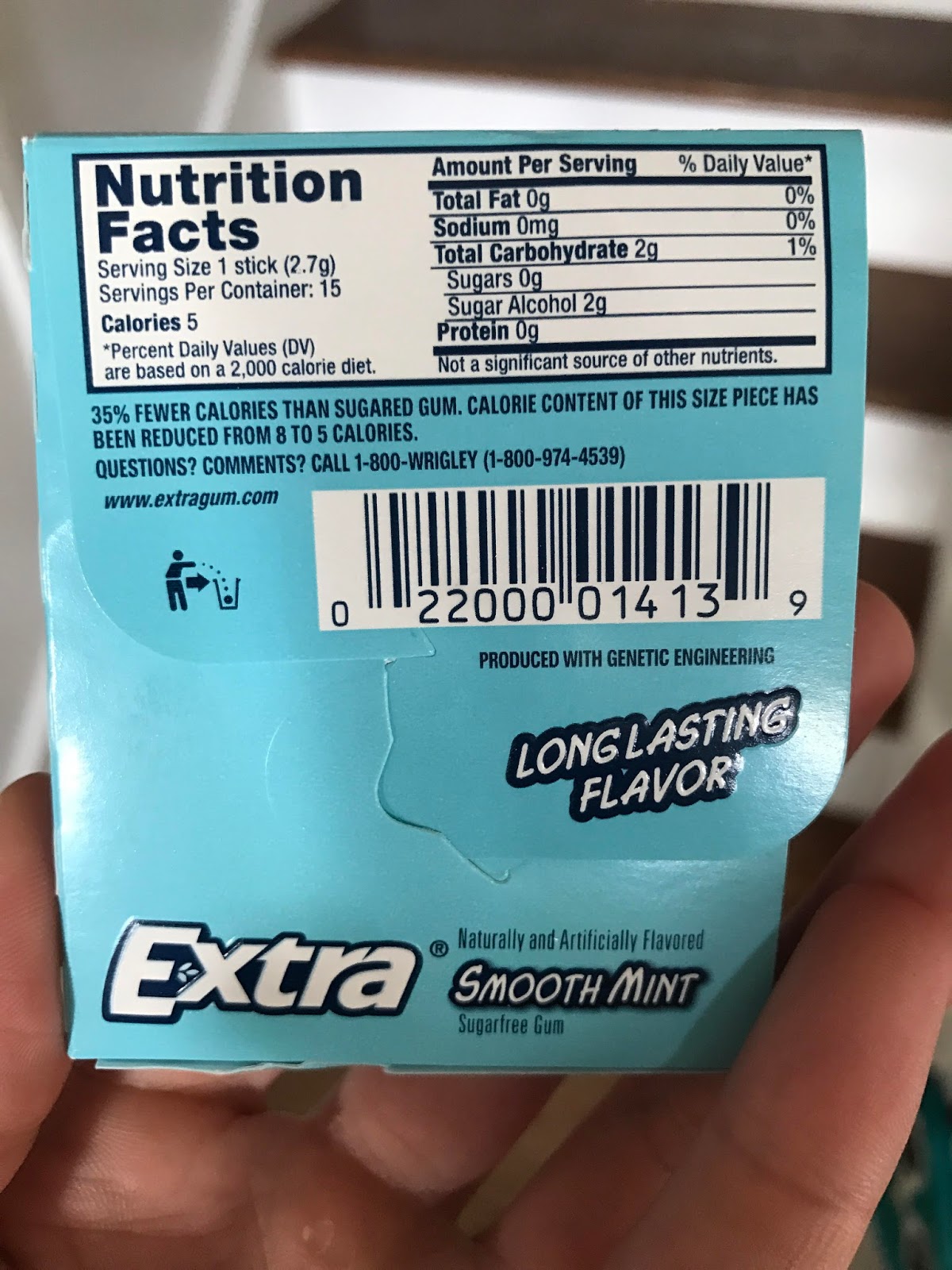
Everything has calories! Even cough drops, and they have 3g of carbs! I learned the hard way when I began. Gum? Mints? Calories. Track them! I am a gum fanatic, I could easily chew a pack a day. Until:


I realized that I was chewing 30 calories and 30 carbs a day. Ice cream has less than 30g of carbs! I'd rather have ice cream!

8. IT SOUNDS LIKE TOO MUCH WORK
When you are starting out, yes! What diet change and lifestyle change is not going to take work getting use to? The beautiful thing about this is that this takes very little time before you master it. I would say 7-12 days before you are able to calculate your macros perfectly and put together a day of food without even thinking about it.

9. COUNT TOTAL CARBS
Not net. Ignore the "net" completely. A carb is a carb whether there is fiber or not, you are intaking the total amount of carbs.

10. HEALTHY DOESN'T MEAN MACRO FRIENDLY, VICE VERSA
For something to be deemed healthy does not mean it has low macronutrients. And for something to be deemed macro friendly, doesn't mean it is healthy.  One of my favorite health bloggers uses the comparison of a banana and a skinny cow ice cream sandwich.
"A banana and a skinny cow hold the same amount of carbs and your body will essentially metabolize them the same. The skinny cow sandwich however is not going to provide you with the vitamins and minerals that the banana will but your body in strict terms of aesthetics will respond the same."

11. HAVE FUN
This isn't your average diet plan of chicken breast and broccoli. There is great freedom in macros, and I encourage my clients to take advantage of that! This is not about deprivation, there can be enjoyment! I like to add whip cream to my coffee, ok, sometimes even a little vanilla ice cream if I have room in my numbers. You can have some chocolate! Peanut butter on my toast, vanilla cupcake goldfish in my yogurt. I am an advocate for an 80/20 lifestyle, 80% clean eating (lean meats, veggies, fruits, nuts, seeds, oils) and 20% fun (chocolate and pizza).  The more you PRACTICE and become familiar with MFP, the better you will also become and being able to fit fun things in here and there.


What are Macros??

Thursday, December 8, 2016
What exactly are macros?

The word "macros" is short for macronutrients. Macronutrients are all of the nutrients that provide calories from your food: protein, fat and carbohydrates.

Carbs are what we utilize for energy and are your main source of fuel. Carbs are converted into energy.

Fats helps protect your organs and is the most concentrated form of energy. There are three types of fats (saturated, unsaturated and trans fat). No trans fat does not equal weight loss. It just simply has been shown that unsaturated fat decreases the risk for heart disease.


Proteins are essential for growth and development. Proteins help build lean muscle mass, and are the energy source when you do not intake carbohydrates. If you don't intake carbohydrates, you must use protein for energy breaking down your source of muscle mass preservation and essentially slowing down your metabolism.

When you are keeping track of your macros or following macros, you are simply keeping track of how much of each macro you are eating a day. Example: Lisa's calculated macro numbers for weight loss are: Protein: 130g    Fat: 60g    Carbs: 150g
That is the amount of each macro Lisa will aim to eat daily to achieve her results.

How do I know what Macro numbers I should be following daily? 

-There are many different ways that you can come up with a set of macro numbers, many ways to do it online or even the app myfitnesspal calculates macros for you when you set up your goals. However, all of these automated ways to do so are using population averages and norms. They do not know your diet history and your current metabolism rate which play a huge factor in following something to lean out.  I can input my information into one online calculator and get one set of numbers, go to another calculator and input all of the same information and it will give me a completely different set. The best way to go about this is...

1. Find a human to help you.  No worrying about which set you should follow, if they are correct, should you really eat 200g of carbs like this says? You will receive custom formulated numbers based on your body, your eating habits, your lifestyle and your history of dieting.

2. High protein, lowER carb. Yes, carbs are essential to our diets, but lowering your carbs (not eliminating them) simply works and is here to stay.

3. A basic formula that seems to work well as a baseline consists of 40% protein, 35% carbs and 25% fat.

4. Learning your personal baseline and total body expenditure can often be tricky, sometimes numbers need to be adjusted a little until the perfect set is found. There is no "one size fits all" macro numbers- even if you are the same age, height and weight as someone.

What is "IIFYM"? 

IIFYM is short for "If It Fits Your Macros", and is essentially the idea that no matter what kind of foods you are eating, processed or clean, your body will metabolize them the same way.

There is of course, with most things in the health and fitness industry, great debate on this. My stance is this:

In terms of health, and what one type of food does to your body (insulin response, gut health, longevity etc) vs another type is non negotiable. Vegetables and fruits, nuts and seeds, lean meats and clean, whole foods are indeed healthier for you and bring in a host of essential nutrients.

But in terms of just strictly weight and fat loss, nutrients, vitamins and your total body health aside, you can essentially eat bad foods in the same macronutrient distribution and maintain the same progress.

I personally aim for 90/10. 90% of my diet is clean and whole, real foods while 10% of it is "junk".  I believe a healthy balance is imperative for lasting results and lifestyle changes. It's unrealistic for most to never have a piece of chocolate or a slice of pizza again. Thanks to macros, you can enjoy a little "junk" here and there without halting any progress or guilt because you can "fit" it into your daily numbers. 

Make sense? Following macros changed my life by helping me to find a balance and a set way that I can live and enjoy food while still continuing to lose weight and meet my training goals. Without feeling restricted or having guilt over something I wanted to have or did have. I hope this answers some of the common questions and curiosity about the macros craze! 


Powered by Blogger.

welcome!

welcome!
Back to Top